In Conversation with Sebastiano Cattiodoro, Vudafieri-Saverino Partners
The Italian Lounge is coming back to CIFF Shanghai for its fourth edition, and it’s shaping up as a business and experience platform built to promote Italian design and lifestyle in the Chinese market. From 5 to 8 September 2026, inside Asia’s leading furniture and interior design fair, the project will set out a prime space where design culture, hospitality, networking and business come together to open up new opportunities for Italian companies.
Edimotion put the project together and runs it, backed by CIFF Shanghai and a strategic partnership with GWA. The Italian Lounge keeps moving forward, growing from a straightforward exhibition project into a platform that’s becoming more and more structured. It’s an ecosystem that brings companies, professionals, institutions and strategic partners together, so Italian businesses can get more out of the Chinese market through visibility, well-matched contacts, content and dedicated services.
We sat down with Sebastiano Cattiodoro, Managing Director for the APAC region at Vudafieri-Saverino Partners, who has taken on the role of the lounge’s art director since it first kicked off.
Discover The Italian Lounge

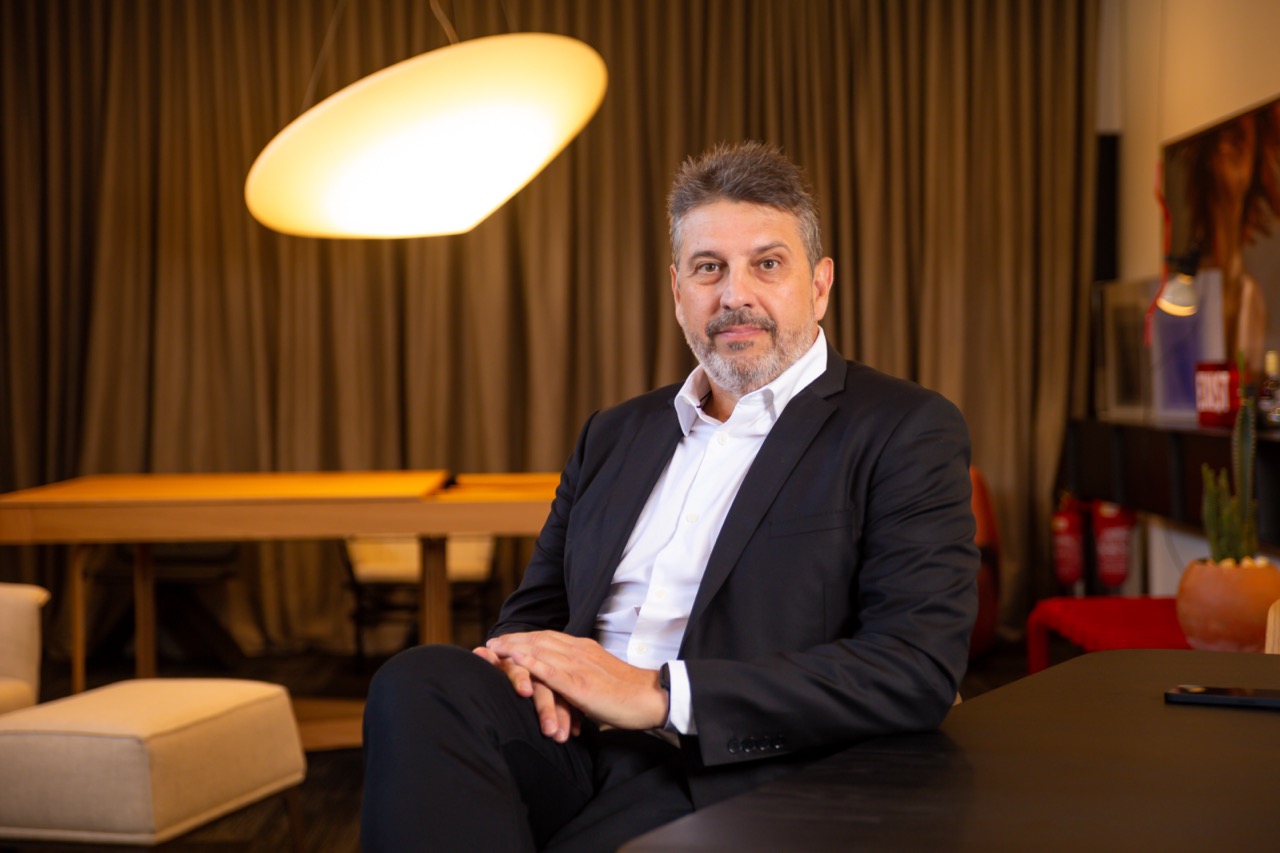
On the right, from right to left, Sebastiano Cattiodoro and Tiziano Vudafieri
Vudafieri-Saverino Partners on Designing “Architects of Relationships”
What was the starting concept, and how does it come through in the physical space of the lounge?
“Our approach always starts with people: rather than just designing environments, we try to shape the relationships those spaces will make possible. For us, architecture is a tool for bringing about encounters, dialogue and sharing, giving shape to places that are balanced, welcoming and able to generate value. That’s why we like to call ourselves “architects of relationships” before we call ourselves architects of buildings or interiors.”
It’s a phrase you hear often in Italian design circles, and it could easily read as just another soundbite. What gives it more weight here is the track record behind it: Vudafieri-Saverino Partners has been building spaces in China since 2012, long enough to know that a lounge that photographs well and a lounge that actually gets people talking to each other are two different design problems.

The Italian Lounge
What criteria guide the choice of materials, furniture and brands for this project?
“The selection grows out of an overall vision, where each element helps tell a coherent story. On one hand, we went for materials and furniture that feel authentic and timeless. On the other, we wanted to highlight companies that stand for the best of Italian design and that have built up a solid presence in the Chinese market. We believe it’s key to bring out not just the quality of the product, but also its ability to speak to this context, helping spread Italian design culture through a real, ongoing presence.”
Are there differences between the Shanghai and Guangzhou versions? Did the two fairs’ contexts call for adjustments?
“Every project has to speak to the context that hosts it. The concept stays the same, but the way it’s read changes. Shanghai is an international platform where design, business and culture are closely woven together. Guangzhou, on the other hand, zeroes in more on materials, technology and production innovation. So we adjusted certain parts of the layout and the storytelling, while keeping the overall identity of the project intact.”

Italian Design in China: Beyond the “Classic Beauty” Stereotype
How do you represent Italian design in China today without falling into the “classic beauty” stereotype or decorative quotation?
“I think the value of Italian design doesn’t lie in a fixed style, but in a way of approaching a project. When we work in China, we don’t try to copy the local language or reach for decorative motifs that are far from our own history — that would come across as inauthentic. What we bring is a specific sensibility, shaped by Italy’s culture of design, which puts the quality of space, human wellbeing, attention to detail and durability at the centre. There’s growing interest in China for these things, and it’s exactly where our vision meets local reality that the most interesting synergies come up.”
What Cattiodoro describes lines up with something we’ve picked up over years of following the Italian design circuit in China: the brands that actually gain ground here aren’t the ones leaning on a recognisable “Italian look”, but the ones that bring a working method — how a project gets thought through, tested and put together — and let that method meet local ways of building and living. That shift, from selling a style to sharing a process, is what separates a one-off fair stand from the sort of long-term presence GWA and Vudafieri-Saverino themselves are pointing to.

Your studio has worked in Asia for years: has anything shifted, over time, in how Chinese audiences and clients see Italian design?
“Absolutely. Over the years, the Chinese market has built up a far more mature design culture. Today, clients aren’t just after an “Italian” look – they want a strategy that can build identity, value and experience. This makes the conversation even more engaging, because design is now recognised as a strategic lever, not just a formal choice.”
Does the Chinese audience have specific, different expectations around comfort, conviviality and the use of space? How did you pick up on them?
“Every culture lives space in its own way. In China, we see strong attention to the quality of the experience, to flexible environments, and to the ability to switch between convivial moments and more private areas that can offer discretion for business meetings. Having worked here for a long time, we’ve learned to read these needs and weave them into our creative process, without ever giving up our own distinctive language.”
How much room for improvisation does a trade-fair project call for, compared to a permanent commission?
“I’d call it adaptability rather than improvisation. Since it’s a temporary space, a trade-fair project allows more freedom to experiment with the concept. At the same time, it comes with far tighter constraints on materials, construction systems and logistics, due to short timelines and safety regulations. The main challenge is to balance creativity with technical feasibility, while keeping the strength of the original idea intact.”

Why a Trade-Fair Lounge Can Become a Business Platform
The lounge area is a space for relationships as much as for representation: what role can it play in building business ties between Italian companies and the Chinese market?
“A carefully designed space conveys values, builds trust and puts people in the best position to meet and talk. So the lounge area isn’t meant only as a space for representation, but as a platform for dialogue. Last year, right inside this space, we had an encounter that later grew into a real collaboration and an important professional commission. That shows just how much the design of a space can shape the quality of relationships and the success of a business meeting.
It’s a small detail, but it says something bigger: a lounge like this doesn’t just showcase Italian design, it puts people in the same room at the right moment, and that’s often worth more than any brochure or catalogue. As The Italian Lounge moves into its fourth edition, that’s arguably the real measure of its growth, not how many square metres it covers, but how many conversations like this one it manages to start.”
Talks, Hospitality and the New Areas of the 2026 Edition
The set-up, designed by Davide Pavanello Lab, will bring to life an immersive experience where architecture, materials, products and atmosphere all work together to tell the story of Made in Italy and bring companies, professionals and buyers together.
Alongside the exhibition area, The Italian Lounge at CIFF Shanghai will host a programme of forums and talks on architecture, design and how the Chinese market is changing, put together by Professor Francesco Scullica of Politecnico di Milano.
Among the new features for the 2026 edition, an area dedicated to Italian hospitality and table culture, dreamed up by architect Alessia Cipolla, will take on hospitality as a tool for building relationships, turning food, drink and tableware into an experience that plays up the Italian lifestyle.